
Blog
NITA Engages Stakeholders on Ghana Electronic Document Wallet Ecosystem
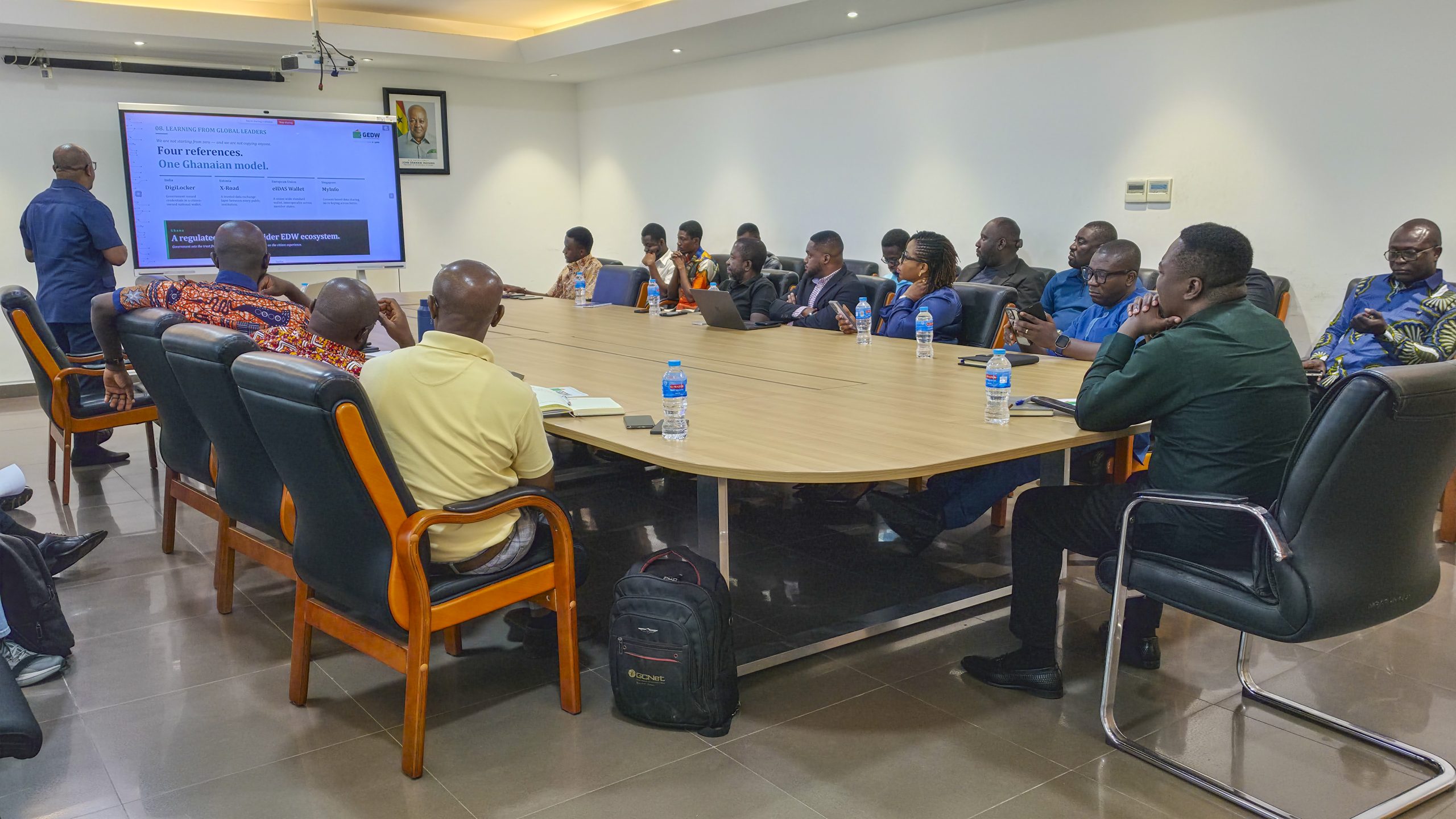
The engagement brought together representatives from Ministries, Departments and Agencies (MDAs), Metropolitan, Municipal and District Assemblies (MMDAs), financial institutions, regulatory bodies, academia, technology companies, startups, and private sector organisations to explore the initiative and provide input on how best the project can be implemented within the Ghanaian ecosystem.
In his opening remarks, the Ag. Director-General of NITA, Ing. Dr. Mark-Oliver Kevor, underscored the importance of trusted digital systems in modern governance and economic development. He noted that many institutions still rely on paper-based processes and fragmented digital platforms in verifying documents which results in process delays, duplication of effort, and increased vulnerability to document fraud.
According to him, the Ghana Electronic Document Wallet Ecosystem is designed to address these challenges by providing a secure and interoperable environment where individuals and organisations can receive, manage, share, and verify digital credentials with confidence.

Representing the Ministry of Communication, Digital Technology and Innovations, the Director for Innovation, Mr. Emmanuel Ofori, reaffirmed Government’s commitment to strengthening digital trust and delivering services that place citizens at the centre. He emphasised the importance of empowering individuals with greater control over their personal information while ensuring compliance with privacy and data protection requirements.
Following the opening remarks, the Head of Technical Services at NITA, Mr. Solomon Kofi Richardson, delivered a comprehensive presentation on the proposed Ghana Electronic Document Wallet Ecosystem. He provided stakeholders with an overview of the initiative’s vision, architecture, governance framework, and implementation approach, explaining how the ecosystem will enable trusted digital credential management and verification across institutions.
Mr. Richardson explained that the platform will allow individuals and organisations to securely receive, manage, share, and verify digital credentials in real time while maintaining greater control over how information is accessed and used. He further noted that the initiative seeks to improve efficiency, strengthen trust in digital transactions, enhance interoperability among institutions, and support seamless service delivery across both the public and private sectors.
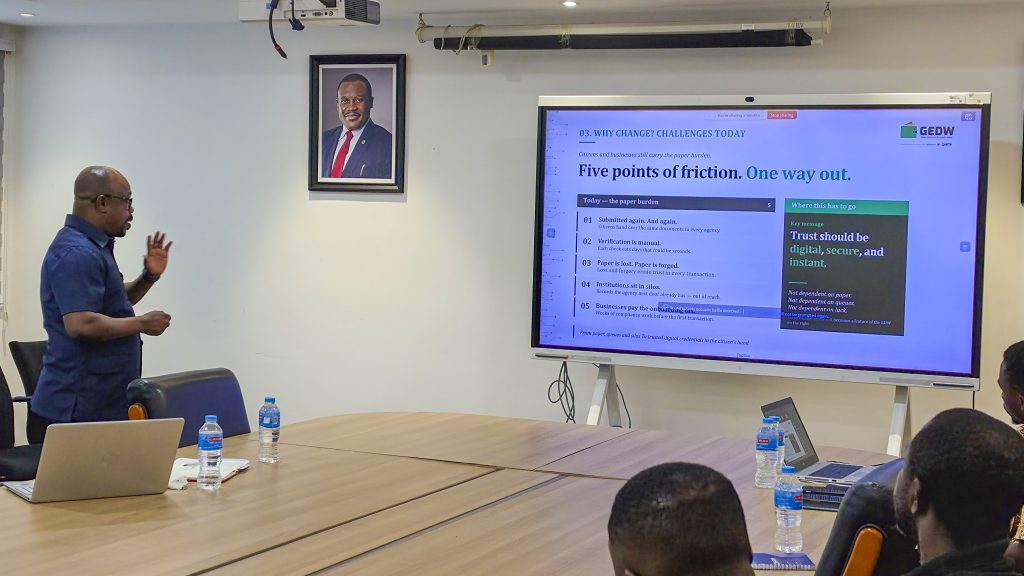
Participants were also taken through successful international digital credential ecosystems and the role of Public Key Infrastructure (PKI) in enabling secure authentication, encryption, digital signatures, and credential verification. The presentation further highlighted the benefits of the initiative for citizens, businesses, and government institutions, including improved efficiency, enhanced trust, and more seamless access to services.
The ecosystem is expected to support a wide range of digital credentials issued by both public and private sector institutions. These may include birth certificates, tax clearance certificates, business registration certificates, licences, permits, passports, land records, insurance certificates, employment records, professional certifications, and educational qualifications.
Stakeholders welcomed the initiative and acknowledged its potential to significantly improve document management and verification processes across the country. Many participants described the initiative as a critical step towards enhancing trust, improving efficiency, reducing administrative burdens, and accelerating Ghana’s digital transformation journey.
The engagement also provided an opportunity for participants to share concerns and recommendations. Discussions highlighted the importance of robust cybersecurity measures, strong governance structures, privacy protection, operational sustainability, and clear accountability frameworks to ensure long-term success.
Participants further recommended broader stakeholder participation during the pilot phase, continuous public awareness campaigns, and the adoption of global best practices tailored to Ghana’s unique context.
The session concluded with a shared commitment among stakeholders to support the development of a secure, interoperable, and citizen-focused digital credential ecosystem. NITA assured participants that all feedback received would be carefully reviewed and incorporated into the ongoing design and implementation process.
As Ghana continues to advance its digitalisation efforts, the Ghana Electronic Document Wallet Initiative is expected to become a key component of the country’s digital public infrastructure, enabling trusted interactions among citizens, businesses, and government institutions.
NITA remains committed to collaborating with stakeholders across the public and private sectors to ensure the successful development and adoption of this important national initiative.
Related posts


